

As developers face increasing pressure to balance design quality, budgets and delivery timescales, the way furniture is sourced is becoming just as important as the furniture itself. Is it time to rethink the traditional supply chain?
For developers delivering Build-to-Rent (BTR), Purpose-Built Student Accommodation (PBSA), hospitality and commercial projects, furniture procurement can be a complex process.
Traditionally, it often involves multiple suppliers, distributors, agents and contractors, each responsible for a different stage of the journey.
While this approach has its place, multiple handovers can introduce additional costs, communication challenges and uncertainty around quality and delivery.
Increasingly, the direct-to-manufacturer model offers an attractive alternative, giving developers and designers greater visibility, flexibility and accountability from concept through to completion.
Greater control over design and quality
Working directly with a manufacturer allows developers and designers to influence furniture specifications from the outset.
Rather than relying on standard catalogue products, dimensions, materials, finishes and functionality can be tailored to suit the individual project.
This is particularly valuable in large residential developments, where hundreds of apartments must achieve a consistent design identity while meeting practical requirements around durability, comfort and maintenance.
Early collaboration also allows potential challenges to be addressed before production begins, helping to avoid unnecessary changes, delays and additional costs.
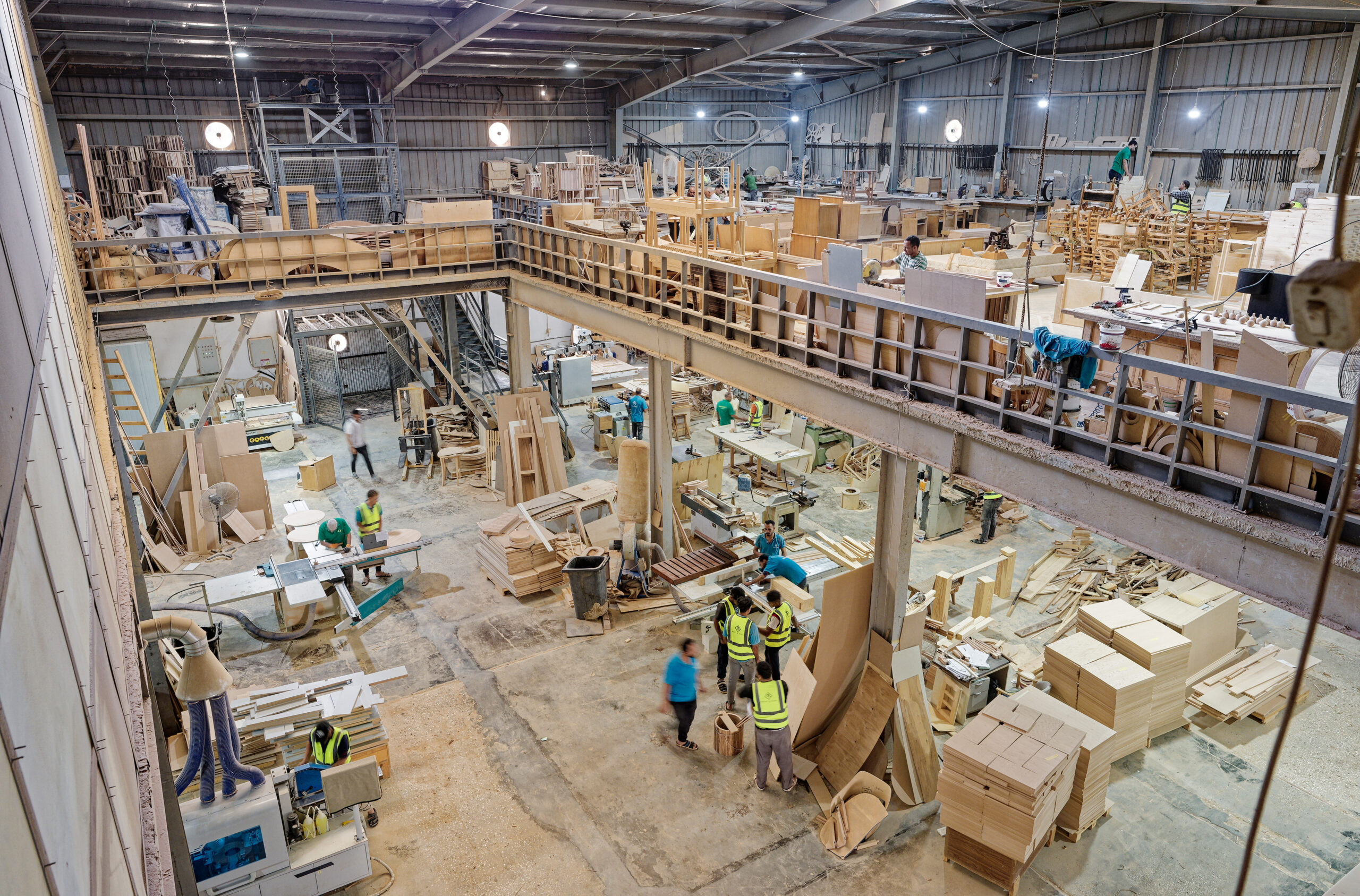
Crucially, quality assurance becomes part of the manufacturing process, with opportunities to review prototypes, inspect materials and assess finished products before shipment.
Better value through greater transparency
Every layer within a traditional supply chain can add cost.
By working directly with manufacturers, developers can simplify procurement and gain a clearer understanding of where their budgets are being spent.
But the benefits go beyond reducing intermediary margins.
Direct collaboration creates opportunities to explore alternative materials, improve production efficiencies and achieve the desired design without compromising quality.
For large-scale BTR and PBSA schemes, even relatively small savings across individual furniture packages can deliver meaningful efficiencies across an entire development.
The objective isn’t simply to buy cheaper furniture. It’s to achieve better long-term value.
International manufacturing, local delivery
Overseas manufacturing is sometimes associated with long lead times, limited visibility and complicated logistics. However, the right manufacturing partnership can overcome many of these challenges.
At Oasix Interiors, our manufacturing facilities in Egypt are less than a five-hour flight from London, allowing clients to visit the factory, meet production teams, review prototypes and inspect completed furniture.
Once approved, shipping through the Mediterranean to the UK typically takes around two weeks.
Combined with our UK-based design, operational and project delivery support, this provides clients with direct access to international manufacturing expertise alongside local coordination and accountability.
One partner, from concept to completion
Furniture procurement doesn’t end when products leave the factory.
For developers, coordinating deliveries, installations and phased handovers is just as important as selecting the right furniture.
Working with a manufacturing partner involved throughout the process can simplify communication, reduce unnecessary handovers and provide clearer accountability when challenges arise.
At Oasix Interiors, we remain involved from initial design and material selection through to manufacturing, quality control, shipping, installation and aftercare.
Backed by nearly three decades of manufacturing experience, we work with developers, operators and interior designers to deliver bespoke furniture solutions across BTR, PBSA, hospitality and commercial environments.
Our approach is straightforward: combine design-led thinking, manufacturing expertise and commercial value within one collaborative relationship.
Rethinking the supply chain
As the property sector continues to focus on efficiency, quality and long-term performance, furniture procurement deserves closer consideration.
For developers, the question is no longer simply where furniture comes from, but how effectively the entire process is managed.
Because the smartest supply chain isn’t necessarily the one with the most suppliers. It’s the one that delivers the right quality, at the right price, with clear accountability from beginning to end.