

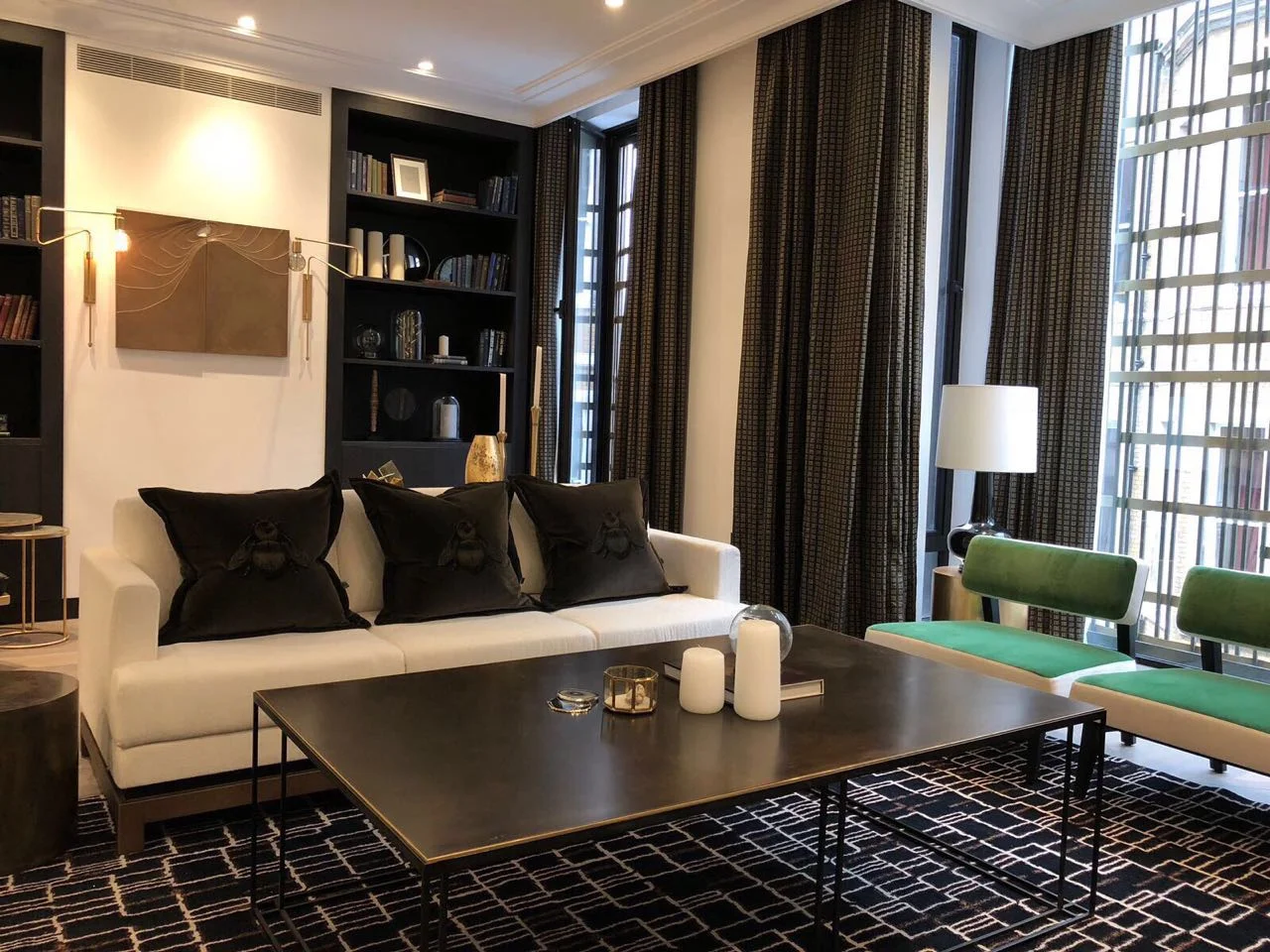
For years, Build to Rent has been engaged in something of an amenity arms race.
Resident lounges became co-working spaces. Gyms became wellness suites. Cinema rooms, private dining spaces, games rooms, roof terraces and increasingly elaborate communal areas all became part of the BTR proposition.
The principle was understandable. In a competitive market, amenities helped developments differentiate themselves, create a sense of community and offer residents something beyond the four walls of their apartment.
But as viability comes under greater scrutiny, a different question is emerging:
Do residents really need more amenities, or do they need better ones?
From more space to smarter space
The BTR market continues to attract significant investor interest, but developers and operators are also facing the realities of construction costs, financing, operational expenditure and affordability. Against that backdrop, the conversation around amenity-light and mid-market BTR is becoming increasingly interesting.
But amenity-light shouldn’t mean character-light.
Nor should reducing the number or scale of communal facilities mean compromising the resident experience. Instead, it places much greater emphasis on the quality, flexibility and functionality of the spaces that remain.
And that means interiors have to work harder.
One space. Multiple purposes.
A beautifully designed residents’ lounge that sits largely empty for much of the day isn’t necessarily a good use of valuable floorspace.
A space that can support remote working in the morning, informal meetings during the day, socialising in the evening and resident events at weekends is a very different proposition.
That flexibility starts with the interior design, but furniture has an important role to play. Modular seating can be reconfigured. Tables can accommodate individual working as easily as group activities. Integrated power can allow social spaces to become workspaces. Storage can be incorporated discreetly rather than requiring separate areas. Screens, shelving and furniture can create privacy or zoning without permanently dividing a room.
The result is not necessarily less amenity.
It is more useful amenity. Furniture shouldn’t dictate how a building is used One of the challenges with highly prescribed communal spaces is that the way residents use a building can change.
The working patterns, lifestyles and expectations of residents occupying a development when it opens may look very different five or ten years later.
We’ve already seen how quickly requirements can change.
Remote and hybrid working increased demand for places where residents could work away from their apartments. Greater focus on wellbeing has changed expectations around communal environments. Different household structures and generations bring different requirements for privacy, socialising and shared space.
The interiors of BTR developments therefore need enough flexibility to evolve with the people using them. Furniture shouldn’t restrict that evolution. It should enable it.
Design for year five, not just launch day
There is another important consideration. BTR interiors are working environments. A chair in a private home might be used for a few hours each day. Seating within a busy BTR communal area could be used by dozens of different people over the same period. That makes durability fundamental.
Yet there can be a temptation during development to specify interiors around the opening of the building: the launch photography, the marketing suite and those first resident tours.
Of course, those moments matter. But what does the furniture look like after three years? Five years? Ten? Can upholstery be replaced? Can damaged components be repaired rather than the whole item discarded? Can furniture be reconfigured if the use of a space changes? Will the design date quickly, forcing an unnecessary refresh?
These questions can have a significant impact on the true lifecycle cost of a BTR interior. The cheapest furniture to purchase isn’t necessarily the cheapest furniture to own. Less replacement. More reinvention. Designing for longevity doesn’t mean creating interiors that never change.
Quite the opposite.
Good furniture specification can allow an operator to refresh an environment without replacing everything within it. Reupholstering seating, refinishing pieces, replacing components or moving modular furniture into a new configuration can transform a communal environment while retaining much of the original FF&E.
This can reduce expenditure, minimise waste and allow operators to respond to changing resident expectations more easily. It also moves the conversation away from disposable interiors and towards assets that have been designed to remain useful.
Quality still matters
There is an important distinction between reducing unnecessary amenity and reducing quality. Residents may not need a cinema room, games room, private dining room, library and several lounges. But the spaces they do use need to feel good. Material choice, comfort, acoustics, lighting, colour, texture and furniture all contribute to whether people genuinely want to spend time somewhere.
When there are fewer communal spaces, arguably each one matters more.
A flexible lounge that becomes the social heart of a development needs to feel considered and welcoming whether one person is sitting there with a laptop or 30 residents are attending an event. That is a much more demanding design brief than simply filling a room with furniture.
The next phase of BTR?
Perhaps the next evolution of BTR won’t be defined by who can offer the longest list of amenities. It may instead be about who understands their residents best, and creates spaces that genuinely reflect how they live.
For developers and operators, that means looking beyond the initial capital cost of an interior and considering flexibility, durability, maintenance, replacement and adaptability throughout the lifecycle of the building. For designers and manufacturers, it means creating furniture that isn’t simply beautiful. It needs to earn its place. Because when every square metre has to work harder, every piece within it should too.
At Oasix Interiors, we work with developers, designers and operators to create and manufacture furniture and interior solutions for BTR, hospitality, student accommodation, later living and commercial environments. With our own manufacturing capability, we can develop bespoke solutions around the way a space needs to perform – balancing design, durability, flexibility and long-term value.
To discuss an upcoming BTR or residential project, talk to the Oasix Interiors team.